
.jpg)

.jpg)
.jpg)
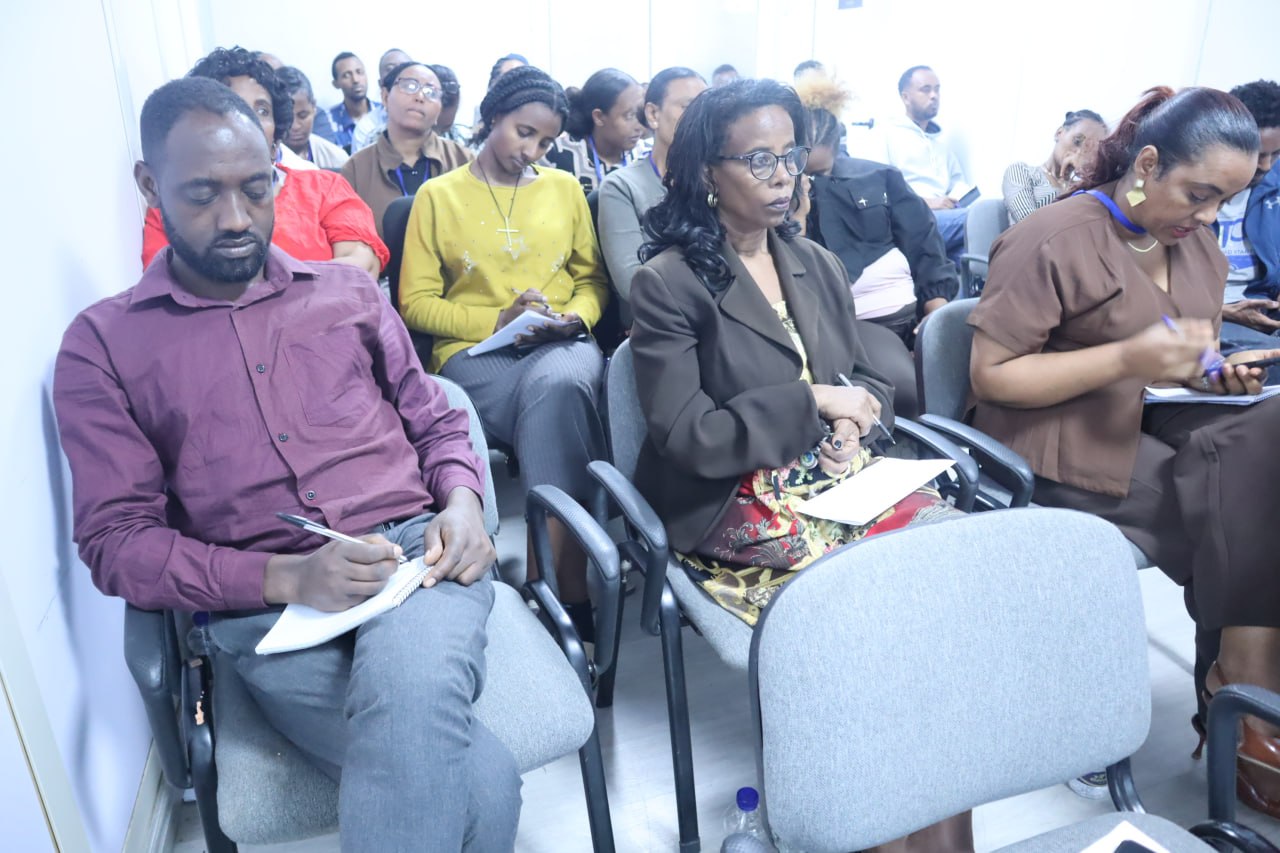
It's important to clearly understand the rules and regulations.
Addis Ababa City Administration Tax Appeal Commission
It's important to clearly understand the rules and regulations.
Addis Ababa, October 2019
You need to have a good grasp of the proclamations and regulations and provide clear and prompt service. This was emphasized during a two-day training organized by the Human Resources Management of the Addis Ababa City Administration Tax Appeal Commission on Tuesday, October 10 and Wednesday, October 11.
The training followed the Civil Servants Proclamation No. 87/2017 of the Addis Ababa City Administration and Regulation No. 201/2018 on the Discipline, Complaint, and Appeal Procedure for Civil Servants of the City Administration.
The Land Acquisition and Compensation Appeals Conference, the Tax Appeals Commission, and the Social Court Judges' Administrative Office took part.
Mr. Jamal Salah from the Directorate of Law Drafting at the Addis Ababa City Administration Justice Bureau led the training on the proclamation. The prosecutor explained the proclamation’s rules about civil servants’ rights and duties. He emphasized that both staff and leaders need to understand the proclamation and use it in their everyday work.
Also, Mr. Alemayehu Wegayehu from the Directorate of Registration and Hearing Affairs at the Tax Appeals Commission gave a training on the Disciplinary Grievance and Appeal Procedure for Civil Servants under Addis Ababa City Administration Regulation No. 201/2018. He explained that the Regulation started on January 8, 2018, replacing the old Regulation No. 26/2002, and it's meant to make the process transparent, accountable, fast, and accessible.
On discipline, he said that every government office should have a disciplinary committee and include women in its members. Committee members serve two years, and they can be reappointed for another term.
Mr. Alemayehu also talked about the different types of penalties. For minor offenses, a verbal or written warning or up to 15 days' wages can be given. Serious offenses can lead to up to three months' wages, demotion, or dismissal for up to two years. An employee can be suspended with or without pay for up to three months, and this must be explained in writing.
He mentioned that investigations should be done, and a decision made within five days of filing charges (or up to two months if more evidence is needed). He also highlighted that the person facing the charges has the right to respond, present witnesses, and give a final opinion.
He explained how to submit a complaint, saying that the Complaint Investigation Committee will have five members. Employees need to submit their complaints within ten consecutive working days. The committee will then submit a report within 15 working days, and the supervisor will make a decision within ten days.
For appeals, employees can appeal to the Administrative Court within 30 days of receiving the written decision. Once an appeal is filed, the decision will be put on hold until the court decides, which should also happen within 30 days.
He also mentioned that the training will help employees and managers better understand labor rights and duties, as well as how to correctly handle disciplinary matters, complaints, and appeals in their work.
Comments
Nothing was found.
Leave Your Comments